




Blog Summary
Learn how to start gold trading with this beginner-friendly guide. Understand how gold markets work, what influences gold prices, different ways to trade gold, key strategies, risk management tips, and how traders can access gold markets through MT5.
Table of contents
Gold has been considered a valuable asset for thousands of years. Today, it remains one of the most actively traded commodities in the world. Many investors turn to gold during periods of economic uncertainty, inflation, or market volatility. If you’re wondering how to start gold trading, you’re not alone. Gold trading is often one of the first commodity markets beginners explore because of its popularity, liquidity, and global significance.
Learning how to start trading gold can help investors diversify their portfolios and gain exposure to one of the world’s most recognized assets. Whether you’re interested in short-term trading or long-term investing, understanding how to start trading in gold is an important first step.
In this beginner’s guide, we’ll explain how gold trading works, what influences gold prices, the different ways to trade gold, and how beginners can get started in 2026.
Why Trade Gold?
Gold is one of the most widely traded commodities globally.
Unlike stocks or bonds, gold is a physical asset that has maintained value for centuries. Investors often use gold as a store of wealth during uncertain economic periods.
Some reasons traders choose gold include:
- High liquidity
- Global demand
- Inflation protection
- Safe-haven appeal
- Portfolio diversification
Because gold often reacts differently than stock markets, it can provide additional balance within an investment portfolio.
Understanding the Gold Market
Before learning how to start gold trading, it’s important to understand the market itself.
Gold is traded worldwide through:
- Commodity exchanges
- Futures markets
- ETFs
- CFDs
- Physical bullion markets
The most commonly traded gold instrument is XAU/USD, which represents the price of one ounce of gold against the U.S. dollar.
Gold markets operate nearly 24 hours a day, providing opportunities for traders across different time zones.
How Gold Prices Are Determined
Gold prices move based on supply and demand.
However, several specific factors heavily influence the gold market.
Inflation
Gold is often considered a hedge against inflation.
When inflation rises, investors frequently move capital into gold to help preserve purchasing power.
Interest Rates
Gold and interest rates often have an inverse relationship.
When interest rates rise significantly, gold may become less attractive because it does not generate income.
When rates fall, gold often attracts increased investor interest.
U.S. Dollar Strength
Gold is generally priced in U.S. dollars.
A stronger dollar can place pressure on gold prices, while a weaker dollar may support higher gold prices.
Central Bank Activity
Central banks around the world hold large gold reserves.
Large-scale buying or selling activity can influence market sentiment.
Geopolitical Events
Wars, political instability, and economic uncertainty often increase demand for safe-haven assets such as gold.
Different Ways to Trade Gold
There are several methods available for traders and investors.
Gold CFDs
Contracts for Difference (CFDs) allow traders to speculate on gold price movements without owning physical gold.
Benefits include:
- Ability to trade rising and falling markets
- Lower capital requirements
- No storage costs
Many retail traders prefer CFDs because of their flexibility.
Gold ETFs
Gold ETFs track the price of gold and trade on stock exchanges.
Benefits include:
- Simplicity
- Diversification
- Easy access through brokerage accounts
Gold Futures
Futures contracts allow traders to buy or sell gold at a future date.
These instruments are commonly used by:
- Professional traders
- Institutions
- Hedgers
Futures generally require a deeper understanding of market mechanics.
Physical Gold
Some investors prefer direct ownership through:
- Gold bars
- Gold coins
- Bullion products
While physical ownership provides direct exposure, it also introduces storage and insurance considerations.
Gold Mining Stocks
Investors can also gain exposure through companies involved in gold production.
Examples include:
- Gold mining companies
- Exploration firms
- Precious metals producers
These stocks may benefit when gold prices rise.
How to Start Gold Trading
Now let’s look at the practical steps involved in how to start trading gold.
Step 1: Learn Gold Market Fundamentals
Begin by understanding:
- What moves gold prices
- Market hours
- Economic indicators
- Risk management principles
Education should always come before trading.
Step 2: Choose a Regulated Broker
Selecting the right broker is critical.
Look for:
- Strong regulation
- Reliable execution
- Transparent pricing
- Educational resources
Trade 24/7 provides access to gold trading through MT5 under the regulatory framework of the Capital Market Authority of the UAE (CMA).
Step 3: Open a Demo Account
A demo account allows beginners to:
- Practice trading
- Learn platform tools
- Test strategies
- Build confidence
Without risking real capital.
Step 4: Develop a Trading Plan
Every trader should establish:
- Entry rules
- Exit rules
- Risk limits
- Position sizing guidelines
Trading without a plan often leads to emotional decisions.
Step 5: Start Small
Begin with smaller positions while gaining experience.
As confidence and consistency improve, position sizes can be adjusted.
How Much Money Do You Need to Start Trading Gold?
One of the most common questions beginners ask is how much money they need to start trading gold. The answer depends on several factors, and there is no single minimum amount that applies to everyone.
Some of the key factors include:
- Broker’s minimum deposit: Every broker sets its own minimum funding requirement to open a trading account.
- Account type: Standard, mini, or professional accounts may have different minimum deposit requirements.
- Leverage: Leverage allows traders to control larger positions with a smaller amount of capital. While this can increase potential returns, it also increases risk.
- Risk management: Rather than focusing on the minimum deposit, traders should ensure they have enough capital to manage trades responsibly without risking a large percentage of their account on a single position.
Many beginners choose to start with a modest amount while practicing sound risk management and gradually increasing their position sizes as they gain experience. Using a demo account first is also a smart way to build confidence before trading with real funds.
Gold Trading Strategies for Beginners
Trend Following
This strategy involves identifying and trading in the direction of the prevailing trend.
Many traders use:
- Moving averages
- Trendlines
- Price action analysis
Breakout Trading
Breakout traders look for gold prices moving beyond key support or resistance levels.
Strong breakouts can lead to significant market moves.
News Trading
Gold often reacts strongly to:
- Inflation reports
- Interest rate decisions
- Employment data
- Geopolitical developments
Monitoring economic calendars can help traders identify potential opportunities.
Gold Trading vs Gold Investing
Many beginners confuse trading and investing.
Gold Trading | Gold Investing |
Focuses on short-term price movements | Focuses on long-term value |
Frequent buying and selling | Buy-and-hold approach |
Requires active monitoring | Less active management |
Uses technical analysis | Often uses fundamental analysis |
Both approaches can be effective depending on individual goals.
Common Gold Trading Mistakes
Trading Without Risk Management
Every trade should include a predefined risk limit.
Over-Leveraging
Excessive leverage can magnify losses quickly.
Ignoring Economic News
Gold is highly sensitive to major economic events.
Chasing the Market
Entering trades after large moves often leads to poor entry points.
Trading Emotionally
Fear and greed can undermine decision-making.
Current Gold Market Trends in 2026
Several themes continue shaping gold markets.
Central Bank Demand
Many central banks continue increasing gold reserves.
Inflation Monitoring
Investors remain focused on inflation trends worldwide.
Economic Uncertainty
Global economic challenges often support safe-haven demand.
Interest Rate Expectations
Market expectations surrounding central bank policy continue influencing gold prices.
These factors help explain why gold remains one of the most closely watched commodities.
Real-World Example
Imagine an investor believes inflation may remain elevated over the next year. Rather than concentrating solely on stocks, they decide to add gold exposure to their portfolio.
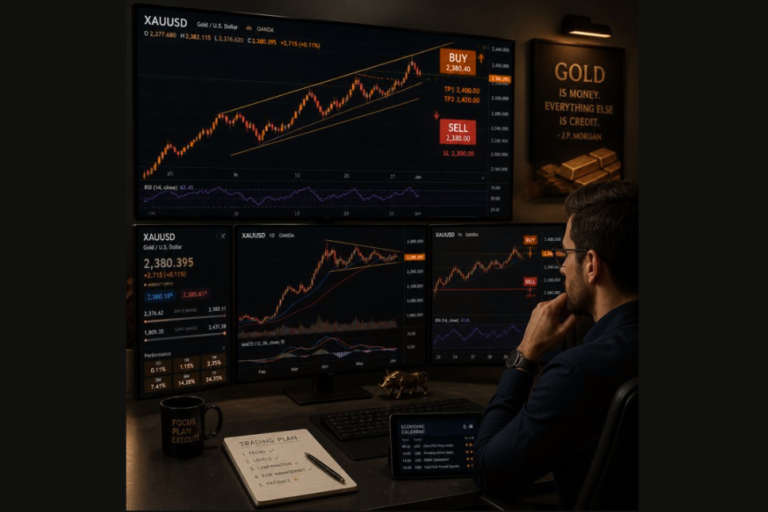
Using MT5 through Trade 24/7, the investor monitors XAU/USD and identifies an upward trend. After practicing in a demo account, they open a small gold position while using a stop-loss order to manage risk.
As inflation concerns increase and investor demand for safe-haven assets rises, gold prices move higher. The investor benefits from diversification while gaining practical experience in the gold market.
This example highlights how understanding how to start trading in gold can help investors participate in commodity markets while maintaining disciplined risk management.
Final Thoughts
Learning how to start gold trading can open the door to one of the world’s most important financial markets. Gold remains a popular asset because of its role as a store of value, inflation hedge, and safe-haven investment during uncertain times.
Understanding how to start trading gold involves more than simply opening positions. Successful traders focus on education, risk management, market analysis, and discipline. Whether you choose to trade gold through CFDs, ETFs, futures, or mining stocks, a structured approach can help improve long-term results.
Trade 24/7 operates under the regulatory framework of the Capital Market Authority of the UAE (CMA) and provides access to gold trading through MT5, allowing traders to analyze market conditions and manage positions using professional trading tools.
FAQs
Start by learning market fundamentals, choosing a regulated broker, opening a demo account, and developing a trading plan before risking real money.
You can trade gold online through platforms such as MT5 using instruments like CFDs, ETFs, or futures contracts.
Many traders begin with small positions using leveraged products such as CFDs. However, proper risk management is essential.
Gold prices are heavily influenced by inflation, interest rates, central bank activity, U.S. dollar strength, and geopolitical events.
Yes. Gold is one of the most widely followed and liquid commodity markets, making it popular among beginner traders.
Ready to Trade Like a Pro?
Open Your Account