



Blog Summary
Learn how commodity markets work in the Philippines with this beginner friendly guide. Find out how commodities are traded through futures, CFDs, ETFs, and exchanges, understand the factors that affect commodity prices, and learn how Filipinos can start trading global commodities in 2026.
Table of contents
Commodity markets play an important role in the Philippine economy by supporting industries such as agriculture, mining, and energy. As one of Southeast Asia’s growing economies, the Philippines is closely connected to global commodity markets through imports and exports of products such as nickel, copper, coconut oil, sugar, rice, and fuel. Since the country imports most of its crude oil and refined petroleum products, changes in global commodity prices can have a direct impact on businesses and consumers.
Understanding how the commodity market works in the Philippines helps traders and investors make better informed decisions, manage market risk, and diversify their portfolios. While the Philippines is known for exporting agricultural products and mineral resources, local traders can also gain exposure to international commodities such as gold, crude oil, silver, and natural gas through regulated financial products.
Commodity trading in the Philippines is mainly carried out through online trading platforms that provide access to global markets using instruments such as CFDs, futures contracts, ETFs, and commodity related stocks. Since there is no major domestic commodity futures exchange, many Filipino traders participate in international markets through licensed brokers that offer access to leading global exchanges. Choosing a regulated broker and understanding the risks involved are important steps for anyone looking to trade commodities in 2026.
What Are Commodity Markets?
Commodity markets are financial markets where raw materials and natural resources are bought and sold. In the Philippines, these markets are closely connected to global trade because the country relies on imported energy products while exporting agricultural goods and mineral resources. Global commodity prices can directly influence fuel costs, food prices, inflation, and business operating expenses across the country.
Commodity markets establish prices for essential goods used in industries such as agriculture, manufacturing, construction, transportation, and energy. While the Philippines does not have a large domestic commodity futures market, Filipino traders can access global commodity markets through regulated online brokers that offer products such as CFDs, futures, ETFs, and commodity related securities.
Examples of commonly traded commodities include:
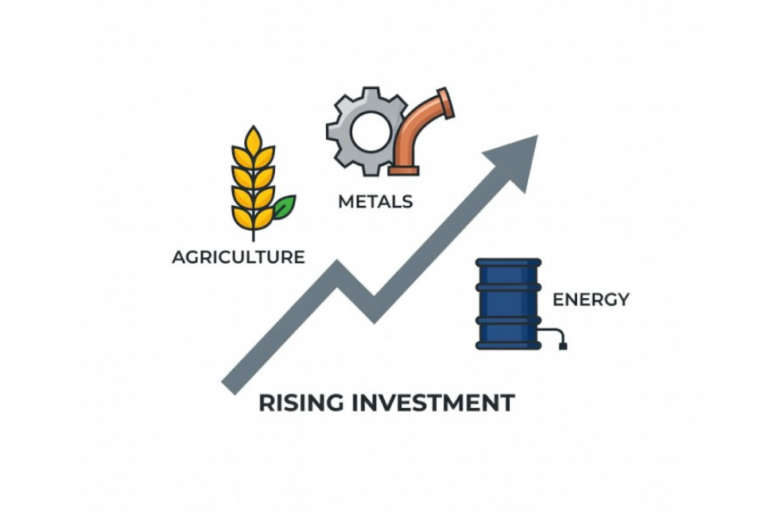
Energy Commodities
- Crude Oil
- Natural Gas
- Heating Oil
- Gasoline
Metal Commodities
- Gold
- Silver
- Copper
- Platinum
- Palladium
Agricultural Commodities
- Wheat
- Corn
- Soybeans
- Coffee
- Sugar
- Cotton
Commodity markets give businesses the opportunity to manage the impact of changing prices, particularly for imported fuel and raw materials. They also allow traders and investors in the Philippines to participate in global price movements across energy, metals, and agricultural commodities through internationally accessible financial markets. Since commodity prices are driven by worldwide supply and demand, economic conditions, and geopolitical events, Filipino traders can benefit from following global market trends while trading through regulated platforms.
How Commodity Markets Work
To understand how commodity markets work in the Philippines, it helps to look at the different participants involved and how they interact in global financial markets. Since the Philippines is a major importer of energy products and an exporter of agricultural goods and mineral resources, local businesses and traders are influenced by commodity price movements around the world.
Commodity markets bring together:
- Producers
- Manufacturers
- Distributors
- Institutional investors
- Speculators
- Retail traders
For example, a company that imports crude oil or agricultural raw materials may use commodity markets to help manage future costs and reduce the impact of price fluctuations. Likewise, businesses involved in mining or agricultural exports can monitor commodity prices to make more informed production and pricing decisions.
Retail traders and investors in the Philippines also participate in commodity markets by trading financial instruments such as CFDs, futures, ETFs, and commodity related stocks through regulated online brokers. Rather than buying physical commodities, they aim to benefit from price movements driven by global supply and demand, economic data, inflation, interest rates, weather conditions, and geopolitical events.
Although the Philippines does not operate a major domestic commodity futures exchange, traders have access to international commodity markets through licensed brokers that connect them to global exchanges. This gives Filipino traders the opportunity to gain exposure to commodities such as gold, crude oil, silver, natural gas, and agricultural products while participating in internationally traded markets.
How Does the Commodity Market Work?
Many beginners ask, how does the commodity market work in practice.
Commodity markets operate through regulated global exchanges where standardized contracts are traded. Instead of physically buying crude oil, gold, or agricultural products, most participants trade financial contracts that represent the value of these commodities. For traders in the Philippines, access is usually provided through international brokers that connect them to major global exchanges.
The trading process generally follows these steps:
- Market participants place buy or sell orders.
- Exchanges match buyers and sellers.
- Transactions are recorded electronically.
- Prices update continuously based on supply and demand.
- Traders either close positions before expiration or settle contracts according to market rules.
Modern commodity markets operate almost entirely through electronic trading systems, making them accessible to traders in the Philippines through online platforms. This allows real time participation in global price movements across energy, metals, and agricultural commodities such as crude oil, gold, wheat, and coffee.
While the Philippines does not have a large domestic commodity exchange, Filipino traders can still participate in global commodity markets through regulated international brokers. This setup makes commodity trading more flexible and closely aligned with worldwide market activity.
Major Commodity Exchanges in the UAE and Globally
Commodity trading occurs on exchanges around the world.
Some of the most important include:
Exchange | Primary Focus |
CME Group | Energy, metals, agriculture |
COMEX | Precious metals |
NYMEX | Energy products |
ICE | Commodities and futures |
These exchanges help ensure transparency, liquidity, and fair pricing.
The Main Participants in Commodity Markets in the Philippines
Understanding how commodity trading works in the Philippines requires knowing the key participants involved in both the local economy and global markets. The country is heavily influenced by imported energy prices and export-driven agricultural and mining sectors, while most trading activity for individuals takes place through international platforms.
Producers
Producers are the companies and entities that extract or generate physical commodities.
Examples include:
- Oil and energy producers in Abu Dhabi and the wider UAE
- Mining and metals suppliers linked to global trade flows
- Agricultural producers from regional and international markets
- Commodity exporters operating through UAE free zones
Producers use commodity markets to lock in future selling prices and reduce exposure to global price volatility, especially in energy-linked sectors.
Commercial Buyers
Commercial buyers use commodities as part of their business operations and supply chains.
Examples include:
- Airlines purchasing jet fuel for operations
• Food manufacturers sourcing grains and raw materials
• Jewellery and gold retailers operating in Dubai’s gold market
• Industrial companies relying on metals and energy inputs
In the Philippines, commercial buyers are particularly sensitive to global oil and food price fluctuations due to the country’s dependence on imports.
Institutional Investors
Large institutions participate in commodity markets to diversify portfolios and manage risk.
Examples include:
- Hedge funds
- Pension funds
- Asset managers
While institutional participation in physical commodity markets is limited locally, exposure is typically achieved through global markets and commodity-linked financial instruments.
Retail Traders
Retail traders are individuals who speculate on commodity price movements through online platforms.
In the Philippines, retail participation has grown through access to international brokers offering trading instruments such as CFDs, futures, ETFs, and commodity-related stocks. Commonly traded assets include gold, crude oil, silver, and agricultural commodities.
Since there is no major domestic commodity futures exchange, Filipino retail traders typically rely on global exchanges accessed electronically. Trading decisions are often driven by global economic data, inflation trends, currency movements, and geopolitical events.
How Commodities Trading Works in the Philippine
Understanding how commodities trading works in the Philippines involves looking at the main instruments available to local traders and investors. Since the country does not have a large domestic commodity futures exchange, most participation happens through international brokers and platforms that provide access to global markets.
Futures Trading
Futures contracts are standardized agreements to buy or sell a commodity at a fixed price on a future date.
For example:
A trader may agree to purchase gold at 2.15 Lakh Philippine peso per ounce three months from now. If gold rises before expiration, the contract may increase in value.
CFD Trading
Contracts for Difference (CFDs) allow traders to speculate on commodity price movements without owning the physical asset.
Benefits include:
- Ability to trade rising and falling markets
- Lower capital requirements
- No physical delivery
ETFs
Commodity ETFs allow investors to gain exposure to commodity prices through stock exchanges.
Popular categories include:
- Gold ETFs
- Silver ETFs
- Energy ETFs
- Agriculture ETFs
Commodity Stocks
Many investors gain exposure through commodity-related companies.
Examples include:
- Gold mining companies
- Oil producers
- Agricultural businesses
Commodity stocks often move alongside the underlying commodity prices.
What Drives Commodity Prices in the Philippines?
Commodity prices change constantly due to global and local market forces. In the Philippines, prices are strongly influenced by international supply chains because the country imports a large share of its energy and certain food products, while also exporting agricultural and mineral commodities.
Supply and Demand
This is the most important factor.
If supply falls while demand remains strong, prices often rise.
If supply increases faster than demand, prices may fall.
Economic Growth
Strong economic growth increases demand for:
- Oil
- Copper
- Steel
- Industrial metals
Weak economic conditions often reduce demand.
Inflation
Commodities are often seen as protection against inflation.
When inflation rises in the Philippines or globally:
- Investors may increase exposure to commodities like gold and oil
- Import costs for goods and energy also tend to increase
Weather Conditions
Agricultural commodities are particularly sensitive to weather events.
Examples include:
- Droughts
- Floods
- Hurricanes
- Extreme temperatures
Geopolitical Events
Global political tensions can disrupt supply chains and affect prices.
Energy and fuel markets are especially sensitive, since the Philippines relies heavily on imported crude oil and refined petroleum products.
Events such as conflicts, trade restrictions, or shipping disruptions can quickly impact local fuel and transport costs.
Current Commodity Market Trends in 2026
Commodity markets continue to evolve in 2026 as global economic shifts, technology changes, and supply chain adjustments reshape demand and pricing.
Energy Transition
The global shift toward cleaner and renewable energy is increasing demand for industrial metals used in modern technologies.
Key commodities include:
- Copper
- Lithium
- Nickel
- Cobalt
These materials are widely used in electric vehicles, batteries, renewable energy systems, and electronics. For the Philippines, this trend is also relevant due to its role in nickel and copper production.
Central Bank Gold Purchases
Global central banks continue to hold and increase gold reserves as part of their long term financial strategy. This steady demand supports the value of gold, which remains a popular asset for investors in the Philippines seeking inflation protection and portfolio diversification.
Supply Chain Realignment
Companies worldwide are restructuring supply chains to reduce risks and improve efficiency. This shift is changing demand patterns for commodities such as energy, metals, and agricultural goods.
For the Philippines, this also creates opportunities in export industries like agriculture and mining, as global sourcing becomes more diversified.
Inflation and Interest Rates
Commodity prices remain closely linked to inflation trends and central bank interest rate decisions.
When inflation is high:
- Commodity prices often increase
- Investors tend to move toward assets like gold and energy products
When interest rates rise:
- Demand for commodities can slow
- Price volatility may increase
These trends highlight why understanding how commodity markets work remains important for Filipino traders and investors in 2026, especially when accessing global markets through regulated trading platforms.
Benefits of Commodity Trading
Diversification
Commodities often move differently than stocks and bonds.
Inflation Protection
Many investors use commodities as a hedge against inflation.
Global Exposure
Commodity markets reflect worldwide economic activity.
High Liquidity
Major commodities such as gold and crude oil are highly liquid.
Risks of Commodity Trading
Price Volatility
Commodity prices can move rapidly.
Leverage Risk
Many trading products use leverage, increasing both profits and losses.
Economic Risk
Changes in growth expectations can significantly impact commodity prices.
Geopolitical Risk
Unexpected political events can create substantial market volatility.
Proper risk management is essential.
How Beginners Can Get Started
Step 1: Learn Market Fundamentals
Understand supply and demand dynamics.
Step 2: Choose a Regulated Broker
Select a trusted commodity broker with commodity market access.
Step 3: Use a Demo Account
Practice before risking real capital.
Step 4: Focus on Major Commodities
Many beginners start with:
- Gold
- Silver
- Crude Oil
Step 5: Manage Risk
Use stop-loss orders and appropriate position sizing.
Commodity Markets vs Stock Markets
Commodity Markets | Stock Markets |
Trade physical resources | Trade company ownership |
Influenced by supply and demand | Influenced by company performance |
Often used as inflation hedges | Often focused on long-term growth |
Highly sensitive to global events | More influenced by business results |
Both markets can complement each other within a diversified portfolio.
Final Thoughts
Understanding how commodity markets work is important for anyone interested in global financial markets, especially in a highly connected economy like the Philippines. Commodity prices influence everyday life, from fuel and transport costs to food prices, inflation, and industrial production.
Learning how the commodity market works helps traders and investors make sense of the forces behind price movements, while understanding how commodities trading works provides access to global markets that reflect real world supply and demand. These markets are widely used as indicators of global economic conditions because they respond quickly to changes in growth, inflation, and geopolitical events.
Whether it is precious metals, energy products, or agricultural commodities, these markets can offer opportunities for diversification and exposure to global trends beyond the local stock market.
For Filipino traders, access to commodities is typically through regulated international brokers that provide trading platforms, charting tools, and market access to global exchanges. Using proper education, risk management, and a clear strategy is essential before participating in these markets, especially when trading leveraged products.
FAQs
Commodity markets work by connecting buyers and sellers of raw materials such as oil, gold, and agricultural products. Prices are determined by global supply and demand, which means factors like economic growth, inflation, weather conditions, and geopolitical events all play a role in price movements.
In the Philippines, commodity markets are mostly accessed through international exchanges rather than a large local commodity futures exchange. Traders and investors participate through regulated global brokers that provide access to electronic trading platforms, where contracts linked to commodities are traded instead of physical goods.
Commodity trading works by speculating on the price movements of commodities using financial instruments such as futures contracts, CFDs, ETFs, and commodity-related stocks. In the Philippines, most retail traders access these markets through online trading platforms connected to global exchanges.
Commodity markets are important in the Philippines because the country is heavily affected by global prices of fuel, food, and raw materials. Since the Philippines imports a large portion of its energy needs, commodity price changes directly impact inflation, transportation costs, and everyday living expenses. These markets also provide opportunities for diversification and exposure to global economic trends.
Yes. Beginners in the Philippines can start by learning market basics, using demo accounts, and focusing on highly liquid commodities such as gold, silver, and crude oil. Many traders use regulated international brokers to access global markets in a structured way. Proper risk management and education are essential before trading with real capital.
Ready to Trade Like a Pro?
Open Your Account